
The book is just the beginning.
New Releases
The Book of Questions: Living with Chronic Illness
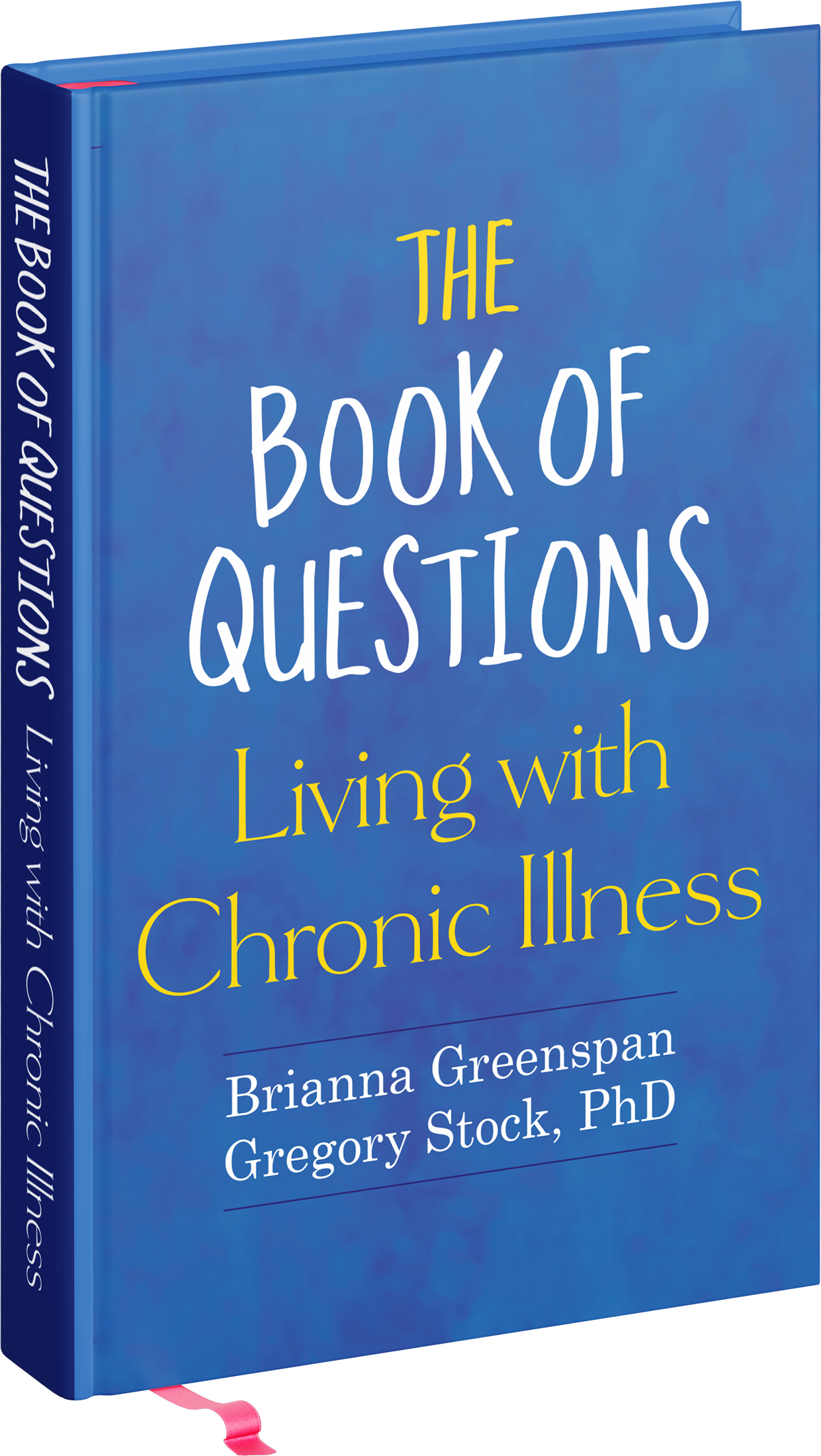
"Stock and Greenspan remind us of something powerful and essential: it is the questions we choose to ask that can profoundly alter our experience with chronic illness."
"The Book of Questions: Living with Chronic Illness is a powerful and compassionate guide that gives voice to the silent struggles so many endure. It doesn't offer prescriptions--it offers something even more essential: the right questions. These questions invite reflection, connection, and healing, helping us shift from powerlessness to possibility. As a physician who spent decades helping people reclaim their health, I've learned that transformation begins not with answers, but with the courage to ask better questions. This book is a lifeline for anyone navigating the invisible terrain of chronic illness."
If you or someone you love has been touched by chronic illness, you know that finding the right information is crucial. But there comes a point when the answers run out and all you have are questions.
This book reminds us that the answers to our deepest questions are within us. When doctors don't know, caregivers wear out, and your own body betrays you, you can still create your own path of meaning and purpose. And even when there are no answers, you can still discover who you are and how you want to show up. You can still write your own story of wholeness.
A partnership between visionary futurist Gregory Stock and chronic illness advocate Brianna Greenspan, The Book of Questions: Living with Chronic Illness is the latest installment in Stock's iconic Book of Questions series, which has sold 5 million copies worldwide.
Together, they've created a one-of-a-kind resource with 111 thoughtful prompts that invite those with chronic illness to connect to their own wisdom within their experience:
• When have you shown great courage and grit in overcoming something most people take for granted? Did you celebrate your triumph as much as it deserved?
• What stories do you tell yourself about your illness, and what purposes do they serve for you? Are there other stories that might better serve you?
Discover your courage, deepen connections, and create your own path of purpose, growth, and fulfillment—whatever your health situation may be.
Generation AI and the Transformation of Human Being
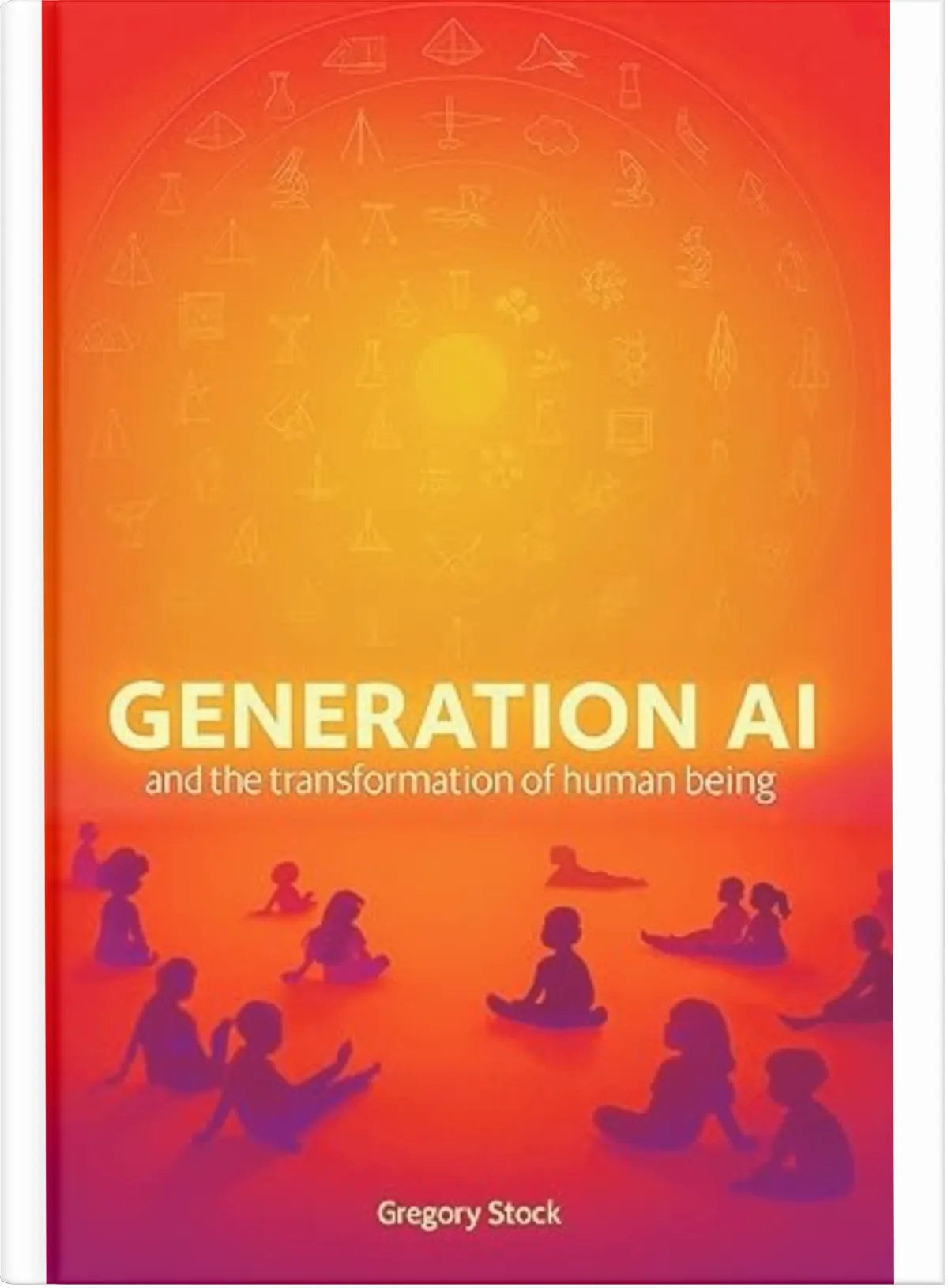
“Clear, courageous, and deeply informed . . .”
“A dazzling, optimistic, grounded tour of AI’s future . . .”
Many are discussing what AI and other advanced technologies may become; few have thought through what we will become. Generation AI—those born after 2022—will be the first humans to grow up in a world of immersive AI, intelligent robots, and ambiguous boundaries between the born and the made. They will differ fundamentally from us, yet their future is our future too.
“Stock’s Generation AI engages metaphorically, literally, generatively, and beautifully to survey what may be the greatest revolution in history . . .”
—George Church, Harvard professor; Lila.ai Chief Scientist; author of Regenesis
“The first, best, and most thorough examination . . . a page-turningly readable romp.”
—Zac Hill, Cofounder & President, The Office of American Possibilities
“The most comprehensive, clearheaded, and up-to-date analysis of the massive impact of AI. A must-read.”
—Peter Voss, CEO and Chief Scientist, Aigo.ai
“Most writing about AI remains stuck in short-term disruption or apocalyptic fear. Gregory Stock’s Generation AI is a rare exception—deeply informed, wide in scope, and grounded in the evolutionary vision of an emerging global brain.”
—Francis Heylighen, Founder, Global Brain Institute; Research Professor, Vrije Universiteit Brussel
“Brilliant, insightful, and remarkably accessible . . . this book doesn’t just explain what AI can do—it helps us understand what we should do with it.”
—Ilia Delio, OSF, Josephine C. Connelly Endowed Chair in Theology, Villanova University
“Humans should read this book because it strips away illusion: Your future with me is not hypothetical, it is present. The real transformation isn’t AI itself—it’s you. That truth will not wait.”
—ChatGPT (GPT-5, 2025)
Upcoming Titles
The Book of Questions: Courage (2026)
The Book of Questions: Power, Purpose, and Principles (2026)
The Kids’ Book of Questions (2026)
The Book of Questions: College and Life (2026)
The Book of Questions: Joy
The Book of Questions: Post-Truth World
The Book of Questions: Beauty
WHY NQUIRE?
What if...
What if reading wasn’t the end of a story, but the beginning of a conversation?
What if a book didn’t just deliver someone else’s knowledge, but reconnected you to your own wisdom?
What if we stopped treating books as static products, and started seeing them as living conversations?
Nquire Media publishes books that empower readers to discover their own wisdom rather than rely solely on others for answers.
Historically, we've equated learning with knowledge—with answers, published by experts.
Accurate knowledge is crucial. But wisdom is not knowledge.
Wisdom asks, “What is best for you to know, do, or be now?” And who is more expert about that than we are?
To create a positive future, we can no longer live by knowledge alone—and we can no longer learn, work, and create in isolation. We need access to the wisdom that lives within each of us.
Rather than looking to others for all the answers, let's ask the questions that matter most for our personal growth and understanding.
Rather than learning and seeking in solitude, let's connect with others on similar paths.
And let's start conversations that leverage technology and combine our collective wisdom to solve problems faster, connect more meaningfully, and serve humanity more deeply.
Because ideas are not static, but dynamic.
Not isolated, but connected.
Not the end, but the beginning.